Device Verification Manufacturing
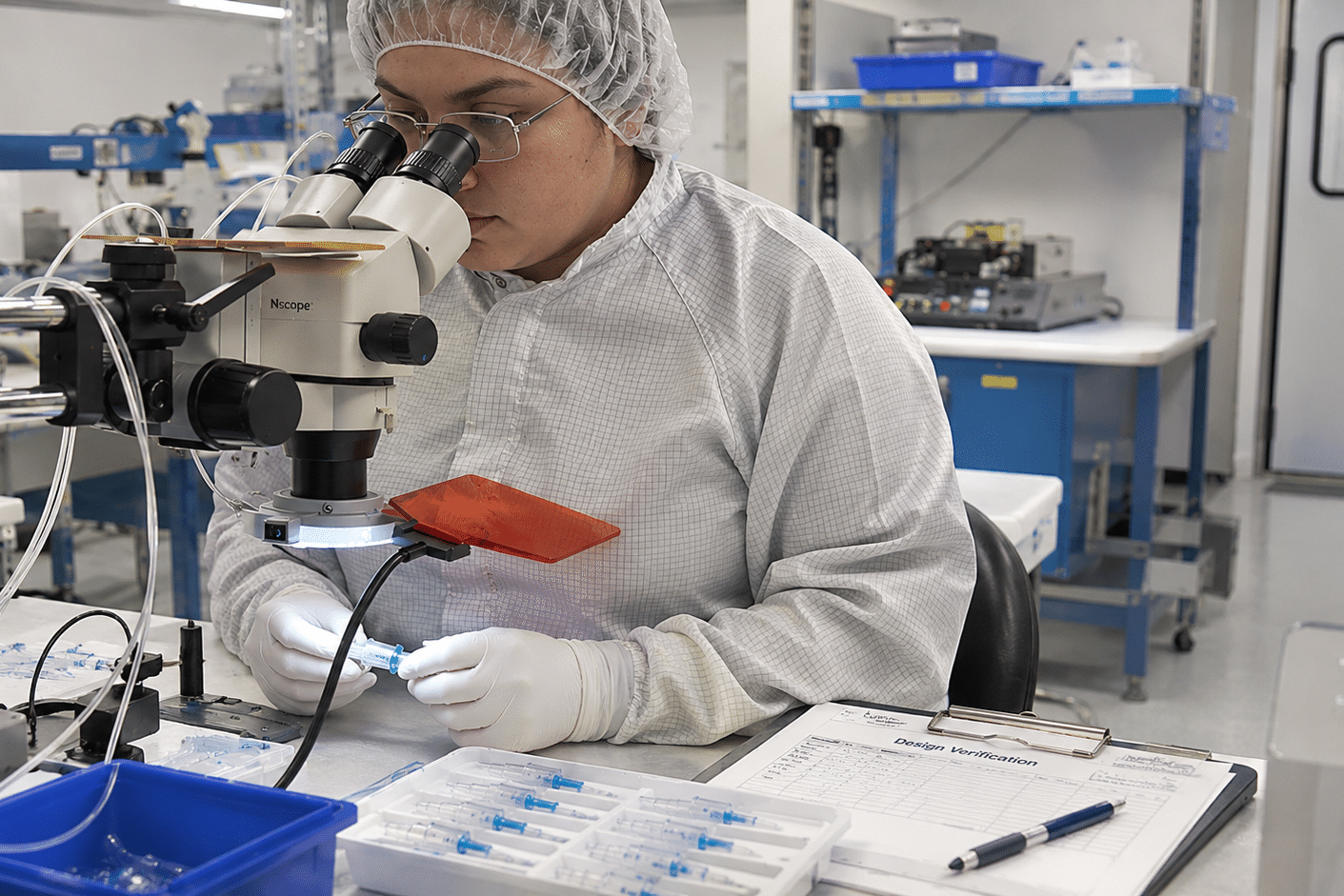
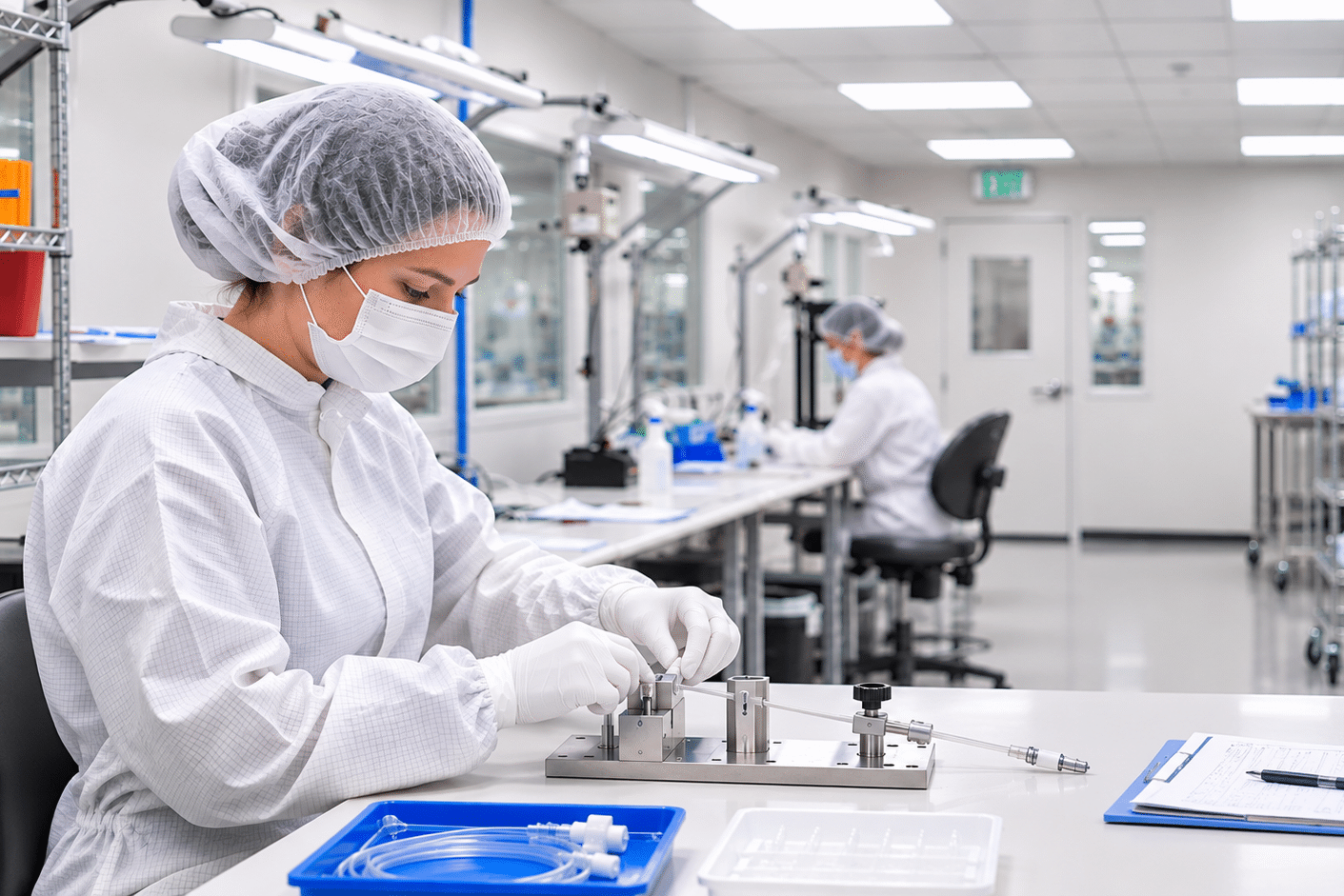
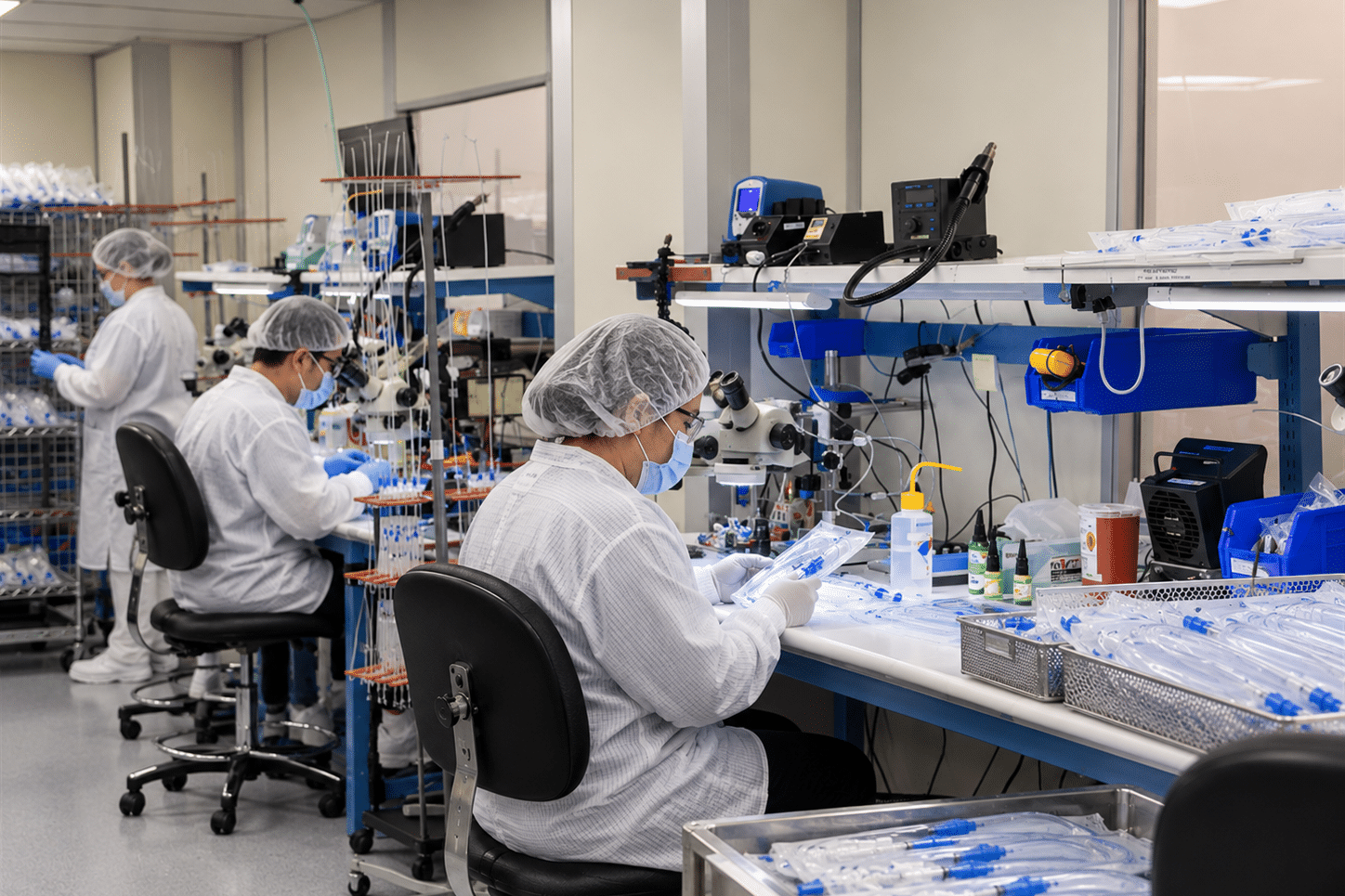
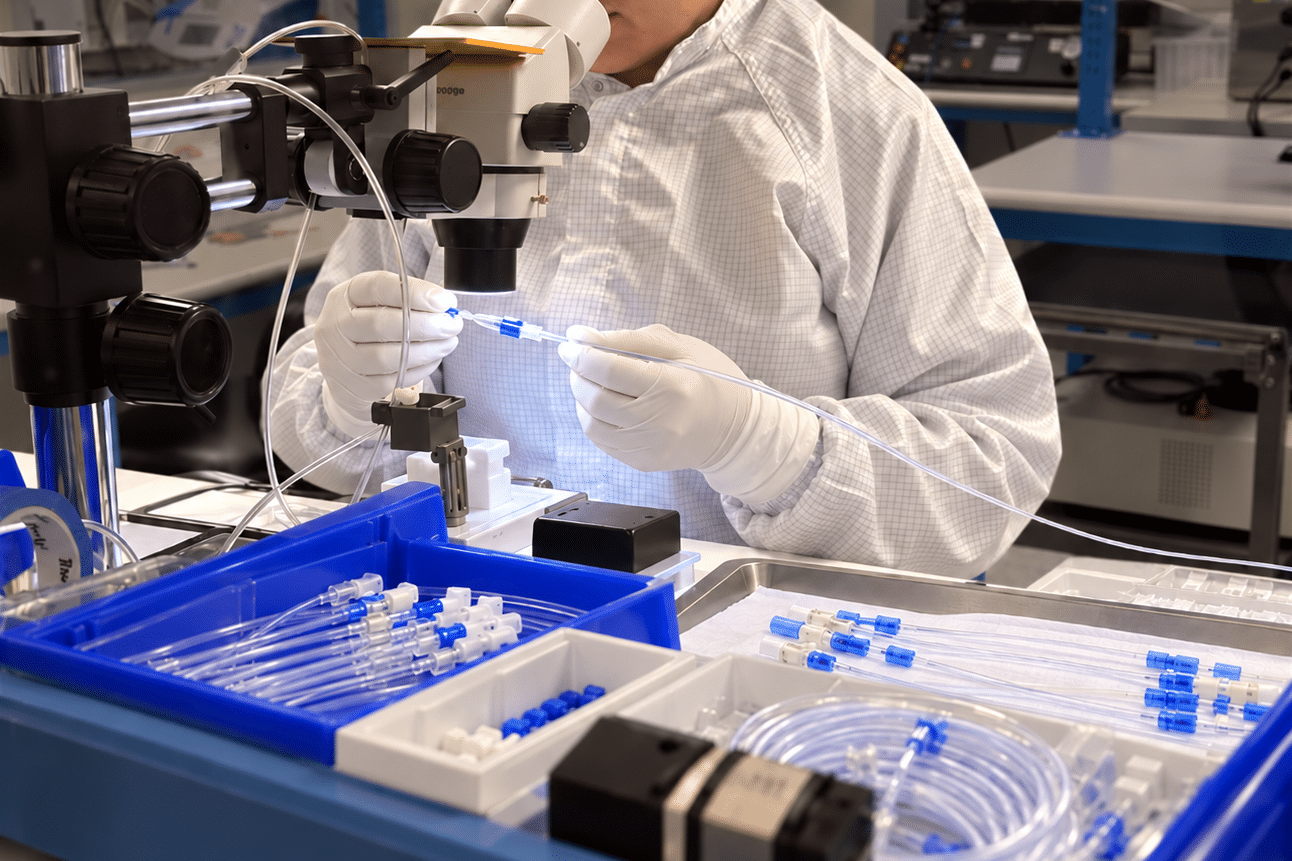
Medical device verification (DV) builds provide controlled, production-intent devices for design verification testing. Pathway Medtech supports medical device companies with ISO 13485-certified manufacturing, documented assembly processes, component traceability, and quality controls to help ensure verification units are representative, consistent, and ready for testing.


Why Medical Device Programs Stall at Device Verification
Moving a medical device from a functional prototype to regulatory submission requires more than demonstrating that the technology works. Engineering teams must establish that the device meets defined design requirements while producing verification units under appropriate manufacturing controls, with documented processes, material traceability, and consistent build execution.
Medical device design verification (DV) manufacturing supports this transition by producing devices for testing against established design inputs. Unlike early prototypes, DV units should be representative of the intended device configuration, with manufacturing methods and documentation appropriate to the verification activities being performed.
For many medical device companies, this stage reveals a gap between successful prototype development and readiness for controlled manufacturing. We help bridge that gap through engineering collaboration, controlled assembly, manufacturing documentation, and traceability, supporting verification activities while preparing device programs for subsequent validation, regulatory submission, and commercialization.
The DV Manufacturing Gap
Large contract manufacturers are optimized for stable, high-volume production. Their systems, pricing models, and operational cadence are designed around mature products with finalized designs, locked bills of materials, and predictable demand forecasts.
Device Verification builds do not fit this model.
At the DV stage, device designs are often close to final but not yet frozen. Engineering insights continue to surface. Manufacturing processes require refinement. Suppliers may still be under qualification. Volumes are limited, yet the regulatory burden is substantial.
This creates a mismatch. From the perspective of a large CM, DV programs carry high operational risk without sufficient volume to justify dedicated resources. As a result, early-stage programs may experience long lead times, limited flexibility, or reduced engagement—none of which align with the realities of verification-stage development.
This gap leaves many companies searching for a manufacturing partner capable of operating comfortably in an environment where precision, adaptability, and documentation matter more than scale.
What DV Builds Actually Require
Device Verification builds are not extended prototype runs. They are production-intent builds designed to support regulatory submission and downstream commercialization.
At this stage, devices must be manufactured under Good Manufacturing Practices within an ISO 13485–certified, FDA-registered facility. Materials, processes, and assemblies must be fully traceable. Documentation must align with Design Controls and risk management requirements. Every build decision becomes part of the regulatory record.
DV manufacturing typically requires:
Requirement one
Structured Device Master Records that define how the device is built
Requirement two
Device History Records that demonstrate execution against those controls
Requirement Three
Change management systems that capture design evolution without breaking traceability
Requirement Four
Alignment with ISO 14971 risk management activities
Requirement Five
Manufacturing data that supports verification, validation, and audit readiness
These builds often directly support regulatory pathways such as 510(k) submissions, PMA applications, and CE technical documentation. They may also feed into verification and validation protocols, sterilization validation, and packaging validation activities.
At this point, manufacturing execution is no longer a downstream consideration – it becomes a core contributor to regulatory success.

Pathway’s Focus: DV & Early NPI Manufacturing
Pathway MedTech is intentionally structured to support low-to-mid volume New Product Introduction and Device Verification manufacturing.
Rather than retrofitting early-stage programs into high-volume production frameworks, we design manufacturing strategies around the realities of DV-stage development. Our infrastructure supports production-intent builds while allowing controlled design refinement and process optimization.
This includes:
- Manufacturing processes designed for verification builds
- Design for Manufacturability and assembly optimization
- Supplier identification, qualification, and consolidation
- Cleanroom manufacturing and sterile barrier system integration
- Process development and early IQ/OQ/PQ planning
- Documentation aligned with regulatory submission requirements
We recognize that DV builds often surface necessary changes. Our systems are designed to manage controlled evolution without compromising quality records, traceability, or submission timelines.
The goal is not just to build units, but to build regulatory confidence.
Bridging DV to Early Commercialization
Following verification, many programs enter a critical bridge phase between regulatory approval and scaled production.
This phase may include pilot launches, early market entry, or limited commercial distribution. Manufacturing volumes remain relatively low, but expectations around consistency, cost, and supply reliability increase rapidly.
Poorly executed early commercialization can introduce long-term consequences. Cost-of-goods may become inflated. Validation gaps may emerge. Supply chains may become fragile. These issues can complicate future scale-up or manufacturing transfer.
A structured approach to this phase allows companies to stabilize processes, refine cost models, and prepare for future growth, whether that growth occurs with the same partner or through a planned transfer to a higher-volume manufacturer.
Pathway supports this transition by maintaining continuity between DV builds and early commercial manufacturing, ensuring that process knowledge, documentation, and quality systems remain aligned as programs mature.


Why Partner Selection at DV Matters
Manufacturing decisions made during Device Verification have lasting impact.
Selecting a partner without early-stage NPI experience can result in delayed submissions, misaligned documentation, inefficient validation strategies, and costly rework. In some cases, programs must repeat verification activities simply to satisfy regulatory expectations that were not properly addressed the first time.
Conversely, working with a partner experienced in DV-stage manufacturing reduces risk across regulatory, operational, and commercial dimensions. It establishes a manufacturing foundation that supports both approval and scalability.
At this stage, the right partner provides more than capacity, they provide context, structure, and foresight.
Faq
Medical Device Design Verification Build FAQs
Design verification builds require controlled manufacturing processes, reliable documentation, and production units suitable for formal testing. These FAQs address common questions about verification build requirements, traceability, manufacturing readiness, and transitioning from prototypes to controlled production.
A design verification (DV) build produces medical device units intended to support testing that confirms whether design outputs meet documented design input requirements. Unlike exploratory prototypes, DV units require appropriate configuration control, traceability, and manufacturing documentation.
Pathway MedTech supports controlled verification builds through integrated engineering, manufacturing, and quality processes, helping companies produce units suitable for their defined verification activities.
A prototype is primarily used to evaluate functionality, feasibility, and design improvements. A design verification build produces devices under defined conditions for testing against established design requirements.
DV builds generally require greater control over materials, assembly procedures, device configurations, and inspection records. Pathway helps companies transition from iterative prototyping to controlled manufacturing processes that support formal verification.
Yes. Medical device companies can manufacture small verification batches without committing to commercial-scale production, provided appropriate manufacturing and quality controls are established.
Pathway supports low-volume DV builds without a fixed minimum order quantity. We evaluate device complexity, documentation, production requirements, and testing objectives to determine a suitable approach for each program.
A medical device DV build generally requires defined design specifications, controlled drawings, a bill of materials, assembly instructions, inspection criteria, and traceability requirements appropriate to the testing plan.
Depending on the device, additional controls and records may be necessary. Pathway works with clients to evaluate existing documentation, identify manufacturing-related gaps, and establish appropriate build requirements before production begins.
Yes. Controlled DV builds can reveal assembly variability, component inconsistencies, process limitations, and documentation gaps that may not be apparent during prototyping.
Identifying these issues before commercial production allows engineering and manufacturing teams to evaluate corrective actions earlier. Pathway integrates development, quality, and manufacturing support to help clients address production challenges while preparing for subsequent validation and manufacturing milestones.
Designed for the Critical Stage Between Prototype and Scale
If your medical device program is entering Device Verification, preparing for a 510(k), PMA, or CE submission, or planning early commercialization, manufacturing strategy becomes a defining factor in program success.
This is the inflection point where engineering, quality, regulatory, and manufacturing must operate as a unified system.
Pathway MedTech focuses specifically on this critical stage. From DV builds through early market launch, we integrate manufacturing execution with regulatory alignment to help programs move forward with confidence—without forcing premature scale or sacrificing documentation integrity.