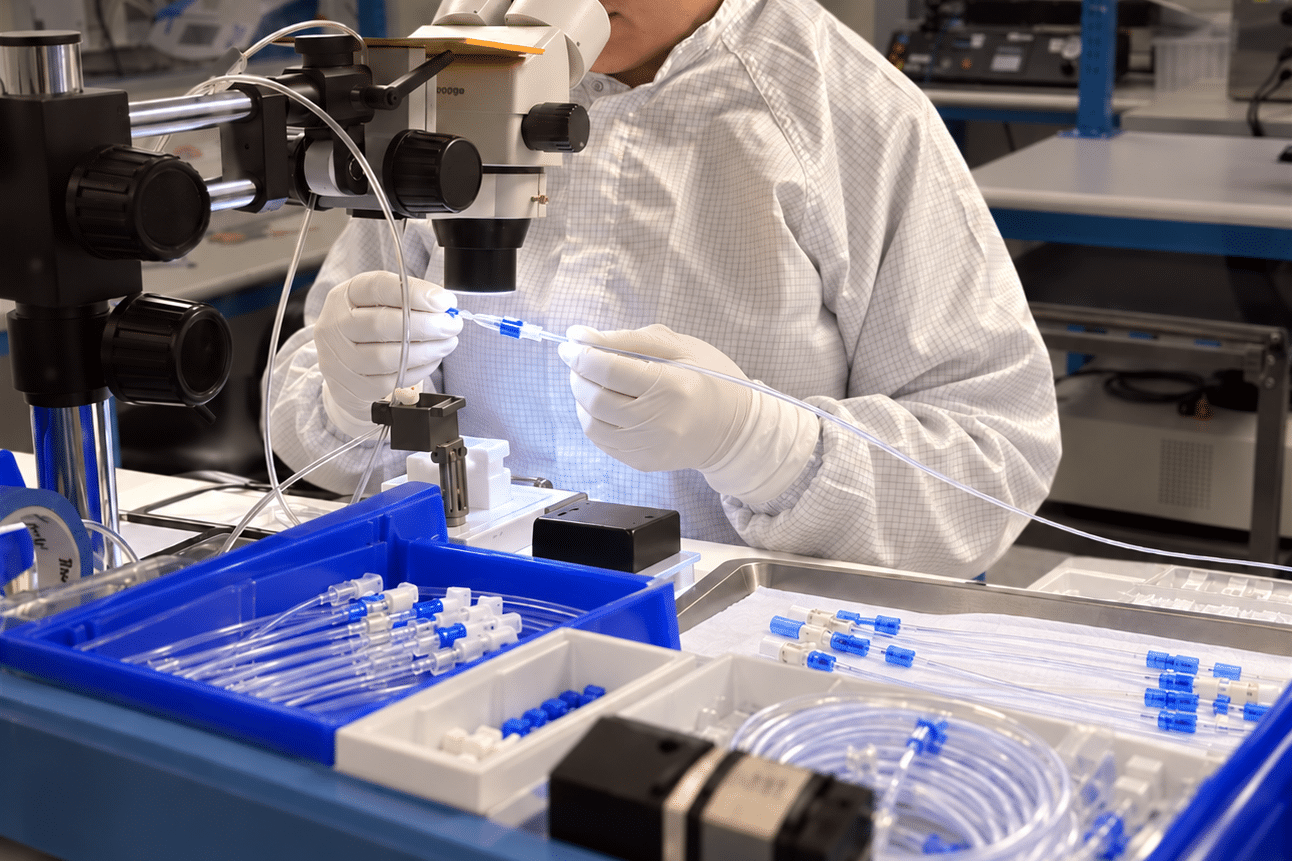


Establishing a reliable shelf life requires more than aging product samples.
Medical device manufacturers must demonstrate that devices and their packaging maintain performance, sterility, and integrity throughout the labeled expiration period.
Pathway helps companies design and execute shelf-life studies that generate meaningful data while supporting development timelines and regulatory submissions.
Shelf Life Studies Are More Than Aging Samples
Shelf life validation is a critical part of medical device development. Companies must demonstrate that their products remain safe, functional, and sterile throughout their intended storage period. Achieving this requires coordinated testing that evaluates both the device and its packaging system after simulated aging conditions.
Without a well-designed shelf life program, teams risk:
Risk #1
Delays during regulatory submission
Risk #2
Packaging failures discovered late in development
Risk #3
Incomplete validation documentation
Risk #4
Expensive redesigns and testing repeats
Pathway works with device teams to plan and execute shelf-life studies that support product development, regulatory expectations, and commercialization readiness.

Shelf Life Studies Are More Than Aging Samples
Shelf life validation is a critical part of medical device development. Companies must demonstrate that their products remain safe, functional, and sterile throughout their intended storage period.
Achieving this requires coordinated testing that evaluates both the device and its packaging system after simulated aging conditions.
Without a well-designed shelf life program, teams risk:
- Delays during regulatory submission
- Packaging failures discovered late in development
- Incomplete validation documentation
- Expensive redesigns and testing repeats
Pathway supports device teams by planning and executing shelf life studies that drive product development, satisfy regulatory expectations, and enable successful commercialization.
What Shelf Life Validation Typically Involves
Shelf life studies evaluate how devices and packaging perform after aging under defined environmental conditions.
Typical shelf life programs may include:
- Accelerated aging studies
- Real-time aging studies
- Packaging integrity testing
- Sterile barrier testing
- Device functionality testing after aging
- Environmental conditioning
- Documentation supporting regulatory submissions
Pathway helps integrate these elements into a coordinated study plan tailored to the device and packaging configuration.


Accelerated Aging & Real-Time Aging
Accelerated aging studies allow manufacturers to estimate long-term product stability within a compressed timeframe by exposing devices to elevated temperatures in controlled environmental chambers.
Real-time aging studies run in parallel to confirm shelf life claims over the actual storage period.
Pathway supports both accelerated and real-time aging activities, including:
- Aging protocol development
- Controlled environmental chamber storage
- Temperature monitoring and environmental data collection
- Study management and documentation
These studies help generate the data required to support expiration dating and regulatory submissions.
Sterile Barrier & Packaging Integrity Testing
For sterile medical devices, shelf life validation is closely tied to packaging performance. Aging studies must confirm that the sterile barrier system continues to protect the device after storage and handling conditions.
Pathway performs sterile barrier testing following aging studies to evaluate packaging integrity and seal performance.
Testing may include:
Visual Inspection
Evaluation of sterile barrier packaging for defects or damage after aging.
Bubble / Leak Testing
Detection of packaging leaks that could compromise sterility.
Peel / Seal Strength Testing
Measurement of seal strength to verify packaging integrity and usability.
How Pathway Supports Shelf Life Studies
Pathway provides end-to-end support for shelf life validation programs, helping device teams move from early planning through final reporting.
Our capabilities include:
- Test Protocol Development: Development of shelf life study protocols aligned with device characteristics, packaging configuration, and regulatory expectations.
- Test Sample Generation: Preparation of test samples through development builds, pouching activities, or tray sealing to ensure representative product configurations.
- Aging Activities: Execution of accelerated and real-time aging studies using controlled environmental chambers with continuous temperature monitoring and data collection.
- Sterile Barrier Testing: Execution of packaging integrity testing following aging, including visual inspection, leak testing, and seal strength evaluation.
- Test Reports & Statistical Analysis: Generation of comprehensive test reports including statistical analyses to support validation documentation and regulatory submissions.
Why Engage Pathway Early
Shelf life studies often intersect with packaging validation, sterilization validation, and regulatory submission preparation.
Engaging Pathway early in the development process helps ensure that shelf life strategies are integrated into broader validation plans and aligned with project timelines.
By coordinating study design, testing execution, and documentation, Pathway helps medical device teams generate the data needed to support confident shelf life claims.