TLDR
TL;DR: Medical device manufacturing processes require validation when their outputs cannot be adequately verified through subsequent monitoring or measurement. Processes such as adhesive bonding, welding, sterile barrier sealing, and sterilization may involve critical characteristics that routine inspection cannot fully establish. Under the FDA’s updated QMSR, manufacturers must address applicable ISO 13485:2016 requirements, including process validation. At Pathway MedTech, we support medical device companies with manufacturing process development, controlled assembly, validation planning, pilot and validation builds, and quality documentation as products transition toward commercial manufacturing.
Understanding Medical Device Process Validation
Why Final Inspection Cannot Tell the Whole Story
A medical device can appear properly assembled, meet its dimensional specifications, and pass a routine visual inspection while still containing manufacturing defects that compromise its performance. An adhesive bond may not have cured completely, a welded connection may contain an internal weakness, or a sterile barrier package may have an undetected channel within its seal. Although these defects may not be immediately apparent, they can affect the device’s reliability, functionality, or ability to meet its intended requirements. This distinction becomes especially important as medical device companies transition from engineering prototypes into design verification, clinical production, and commercial manufacturing. Processes that work successfully during development may depend on highly experienced technicians, carefully selected materials, or manual adjustments that are difficult to reproduce consistently across operators, equipment, and production lots. Establishing a repeatable manufacturing process requires understanding not only whether a finished device meets its specifications, but also whether the methods used to manufacture it can consistently produce acceptable results.
At Pathway MedTech, we help medical device companies address these challenges through manufacturing process development, production documentation, validation planning, and controlled manufacturing. Our approach connects engineering requirements with the equipment, materials, work instructions, and quality controls needed to support consistent production. By addressing manufacturing variability during development and production planning, we help companies identify potential process limitations before they become more difficult to resolve during verification or commercialization.
What Is Medical Device Process Validation?
Medical device process validation is the documented demonstration that a manufacturing process can consistently produce outputs meeting predetermined specifications and quality requirements. Unlike finished-product inspection, which evaluates characteristics of the completed device, process validation examines the manufacturing operation itself. This includes evaluating equipment, materials, operating parameters, personnel, procedures, environmental conditions, and other factors that can influence product quality. The objective is to establish confidence that the process will continue producing acceptable results when operated under defined conditions, rather than relying exclusively on inspection to identify defects after manufacturing is complete.
ISO 13485:2016, particularly Clause 7.5.6, addresses validation of production and service processes when their resulting outputs cannot be, or are not, verified through subsequent monitoring or measurement. For manufacturers operating in the United States, these requirements are now incorporated into the FDA’s Quality Management System Regulation. Effective February 2, 2026, the QMSR revised 21 CFR Part 820 to incorporate ISO 13485:2016 by reference, replacing the former standalone process-validation provision under 21 CFR 820.75 with the applicable requirements of the incorporated standard. This regulatory framework reinforces the importance of documented process controls and evidence demonstrating that manufacturing operations can achieve their intended results consistently.
Process Validation vs. Final Inspection
Although process validation and final inspection contribute to manufacturing quality, they serve different purposes. Final inspection determines whether measurable characteristics of a finished product meet established acceptance criteria, while process validation evaluates whether the manufacturing operation can reliably produce those characteristics. Consider a medical device assembly containing two plastic components joined with an adhesive. An inspector may confirm proper alignment, visually examine the adhesive application, and verify that the components are positioned correctly. However, these observations may not establish whether the adhesive has cured sufficiently or whether the joint can withstand the required mechanical loading. A destructive pull test could provide additional evidence, but testing every completed device to failure would make those devices unusable. In these circumstances, manufacturers may need to establish and validate appropriate bonding parameters, including adhesive application, curing conditions, component positioning, and other variables affecting bond performance.
The determining factor is whether the relevant product characteristics can be adequately verified after manufacturing. Some operations, such as producing components with accessible dimensions that can be reliably measured, may be addressed through appropriate inspection and testing. Other processes involve characteristics that cannot be fully evaluated without damaging the product or using methods that do not adequately detect potential defects. Understanding this difference early helps manufacturers establish appropriate inspection strategies, determine validation requirements, and avoid relying on quality controls that cannot identify the most significant manufacturing risks.
Which Medical Device Manufacturing Processes Require Validation?
Not every manufacturing operation requires the same validation approach. The need for process validation depends on the device, the manufacturing technology, the characteristics being produced, and whether those characteristics can be adequately verified through subsequent monitoring or measurement. Certain operations are particularly likely to require validation because their performance depends on process conditions that cannot be fully evaluated through routine inspection.
Adhesive Bonding and Component Assembly
Adhesive bonding is widely used in medical device manufacturing to join components, secure connectors, and assemble products containing materials that may not be suitable for conventional mechanical fastening. Bond performance can depend on substrate compatibility, surface preparation, adhesive selection, application volume, component alignment, curing conditions, and environmental factors. Even small variations in these parameters can influence the strength and consistency of the finished connection. A bond may appear acceptable during visual inspection while containing insufficient adhesive, incomplete curing, or inadequate surface adhesion. Where critical bond characteristics cannot be adequately verified after assembly, process validation may be necessary to demonstrate that the manufacturing operation consistently produces joints meeting established requirements.
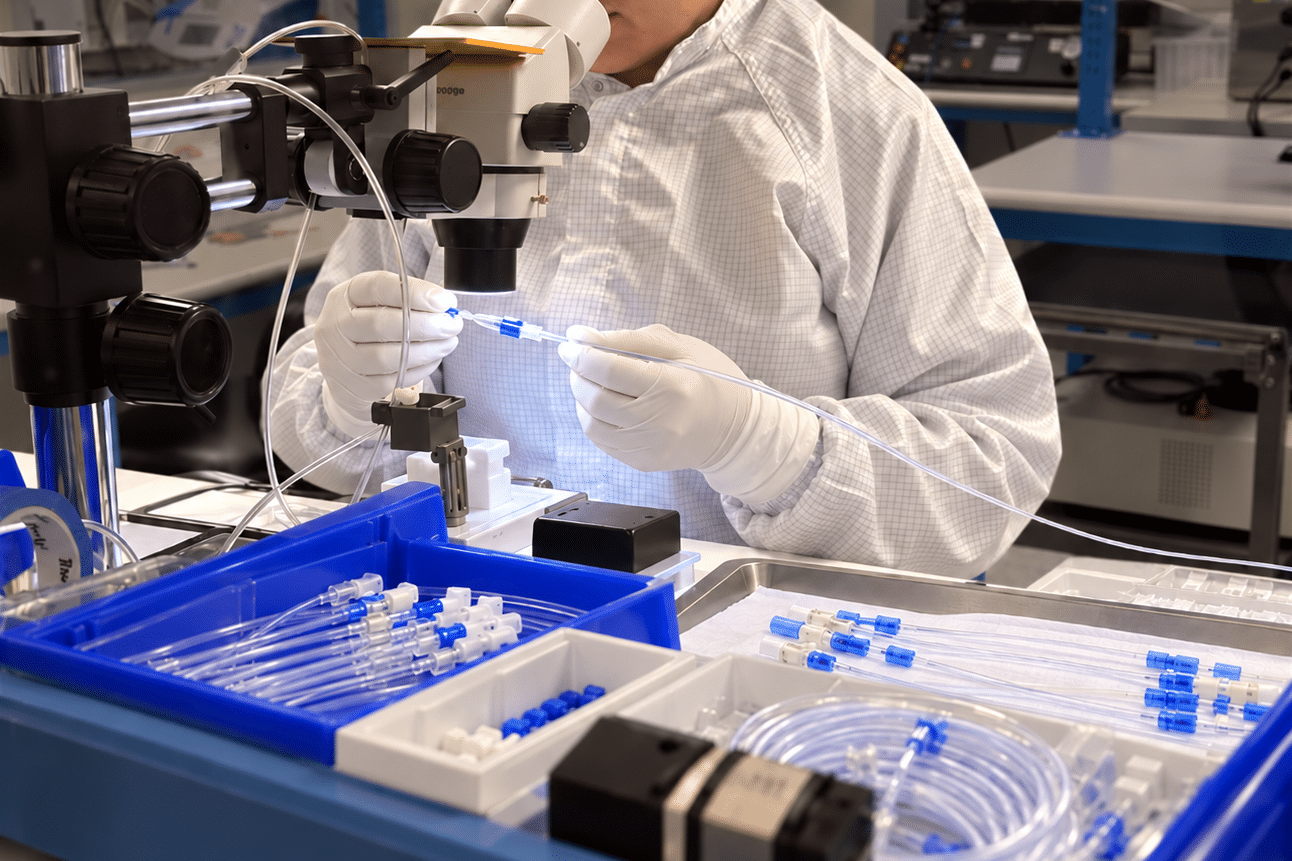
For companies transitioning from prototype development into production, adhesive bonding can reveal significant differences between engineering feasibility and manufacturing readiness. An experienced technician may successfully assemble a small number of devices through manual adjustments, but that approach may not provide the repeatability required for recurring production. At Pathway MedTech, our engineering and manufacturing teams support process development, assembly fixture planning, and controlled manufacturing methods that help translate device requirements into repeatable operations.
Welding and Joining Operations
Medical device manufacturing may involve ultrasonic welding, thermal joining, laser welding, or other techniques used to create permanent connections between components. The quality of these joints can depend on operating parameters such as energy, pressure, time, alignment, tooling condition, and material characteristics. Although external inspection may identify visible defects, it may not reveal internal weaknesses or inconsistencies that affect the joint’s performance. When critical characteristics cannot be adequately verified after joining, manufacturers may need to establish validated operating conditions and demonstrate that the process consistently produces acceptable results.
Sterile Barrier Sealing and Packaging
Sterile barrier sealing is another important example of a manufacturing process where visual inspection alone may not provide sufficient evidence of performance. A medical device pouch or tray may appear properly sealed while containing localized channels, inconsistent sealing characteristics, or defects that compromise package integrity. ISO 11607-2 addresses validation requirements for the forming, sealing, and assembly processes used to produce packaging systems for terminally sterilized medical devices. Depending on the packaging configuration, validation activities may include evaluating sealing parameters, seal strength, package integrity, and process repeatability.
At Pathway MedTech, we support sterile barrier development, sealing process validation, packaging integrity testing, and related qualification activities. Our packaging capabilities allow us to evaluate the relationship between packaging materials, sealing equipment, operating parameters, and the manufacturing process. By integrating packaging validation with medical device assembly and sterilization coordination, we help manufacturers establish packaging operations that can be consistently reproduced during production.
Cleaning and Sterilization
Cleaning and sterilization processes may also require validation because their effectiveness cannot necessarily be established through routine examination of the finished device. Cleaning validation may need to demonstrate that a defined process consistently achieves established cleanliness requirements, while sterilization validation addresses the ability of the selected sterilization process to achieve its intended outcome. The applicable testing methods, acceptance criteria, and standards depend on the device and the process involved. These activities require their own technical considerations and should not be treated as interchangeable with general manufacturing process validation.
Our approach considers assembly, packaging, quality requirements, and sterilization coordination as connected elements of the broader manufacturing program. This allows potential process dependencies to be evaluated before they create additional complications during production or validation.
How Medical Device Manufacturing Processes Are Validated
Understanding Installation, Operational, and Performance Qualification
Installation Qualification (IQ), Operational Qualification (OQ), and Performance Qualification (PQ) are widely used stages for establishing documented evidence that a manufacturing process can consistently achieve its intended results. Although the specific validation approach depends on the process and applicable requirements, this framework provides a structured method for evaluating equipment installation, operating conditions, and performance under representative manufacturing conditions.
Installation Qualification (IQ) establishes evidence that equipment and supporting systems have been installed according to approved requirements and are suitable for their intended operation. Depending on the manufacturing process, this may include reviewing equipment specifications, installation conditions, utilities, calibration, documentation, and other relevant setup requirements. Operational Qualification (OQ) evaluates the process across defined operating conditions to establish acceptable parameters and operating limits. For example, a sealing process may require evaluation of temperature, pressure, and dwell time to determine the conditions under which acceptable seals can be consistently produced. Rather than demonstrating that the process works at a single preferred setting, OQ helps establish an appropriate operating window, including relevant worst-case conditions. Performance Qualification (PQ) evaluates whether the process performs consistently under representative production conditions, using appropriate equipment, trained personnel, approved procedures, and representative materials. This stage helps demonstrate that the process can achieve its intended results under the conditions expected during routine manufacturing.
The value of IQ, OQ, and PQ extends beyond producing qualification reports. These activities help manufacturers understand process limitations, identify critical variables, establish appropriate controls, and demonstrate repeatability. An OQ that establishes acceptable operating parameters without considering relevant material variation may leave important questions unanswered. Similarly, a PQ performed using carefully selected engineering samples that do not represent normal manufacturing conditions may not adequately demonstrate production readiness. At Pathway MedTech, we support validation planning, manufacturing documentation, pilot and validation builds, and controlled process development, with qualification activities tailored to the device and manufacturing requirements.
Developing a Manufacturing Process Validation Plan
A well-developed validation plan begins with understanding the product requirements and the manufacturing characteristics that influence performance. Manufacturers must identify which process outputs are critical, which operating variables affect those outputs, and what evidence is necessary to demonstrate consistent results. The plan should establish the intended process, equipment and material requirements, relevant risks, operating parameters, qualification activities, testing methods, acceptance criteria, sampling rationale, and required documentation. There is no universal sample quantity appropriate for every validation study. Sample sizes and testing strategies should be justified based on the process, associated risks, expected variability, and the level of confidence required.
Validation planning should also address deviations, changes, and the relationship between process validation and other development activities. For example, a sealing process validated using a particular material configuration may require additional assessment if that material is subsequently changed. Likewise, design verification and process validation should not be confused. Design verification evaluates whether design outputs meet design inputs, while process validation addresses whether the manufacturing process can consistently produce conforming results. Both activities may be necessary, but they establish different types of evidence. Our team helps medical device companies evaluate manufacturing readiness, develop production documentation, and establish appropriate validation strategies as programs transition toward controlled manufacturing.
Maintaining a Validated Manufacturing Process
Completing process validation does not eliminate the need for ongoing monitoring and process control. Manufacturing operations can change over time through equipment wear, calibration drift, material variation, supplier changes, maintenance activities, or modifications to operating procedures. These changes may influence process performance even when the original qualification results were acceptable. Manufacturers therefore need appropriate controls for monitoring critical parameters, evaluating deviations, maintaining production records, and assessing whether changes require additional verification or revalidation. Not every change automatically requires repeating an entire qualification, but its potential effect on the validated process should be evaluated and documented.
This is particularly important for low-volume medical device manufacturing, where production may occur in smaller or less frequent lots. Maintaining clear work instructions, equipment requirements, operator qualifications, and process documentation helps preserve consistency between manufacturing runs. At Pathway, we integrate quality oversight, traceability, production documentation, and process-development support into our manufacturing programs, helping companies maintain control as production requirements evolve.
Moving From Prototypes to Commercial Manufacturing
Why Prototype Success Does Not Guarantee Production Readiness
A successful prototype demonstrates that a medical device design can function as intended under the conditions evaluated, but it does not necessarily establish that the product can be manufactured consistently at production scale. During early development, engineering teams often have the flexibility to make manual adjustments, modify assembly methods, rework components, or troubleshoot individual units. These activities can be appropriate when evaluating design feasibility, but they may not translate directly into a controlled manufacturing environment. As a device approaches design verification, clinical production, or commercialization, the manufacturing process must become sufficiently defined to support repeatability, traceability, and appropriate quality controls.
Consider a device assembly requiring precise alignment between several small components. During development, an experienced engineer may manually position the components and make adjustments until the assembly performs correctly. When production expands, the manufacturer must determine whether the same results can be achieved consistently by trained operators using established procedures. This may require dedicated fixtures, improved component tolerances, defined assembly methods, or additional inspection and validation activities. The objective is to reduce unnecessary dependence on individual operator judgment and establish a manufacturing process that can be documented, monitored, and reproduced.
Identifying Manufacturing Readiness Gaps Before Production
Manufacturing readiness involves evaluating more than whether the device design has been finalized. Companies must also consider equipment suitability, material availability, supplier controls, assembly methods, production documentation, inspection capabilities, and process validation requirements. A manufacturing operation that depends on informal instructions or undocumented adjustments may become difficult to reproduce as production volumes increase. Similarly, a process that produces acceptable engineering samples may encounter variability when different material lots, operators, or equipment conditions are introduced.
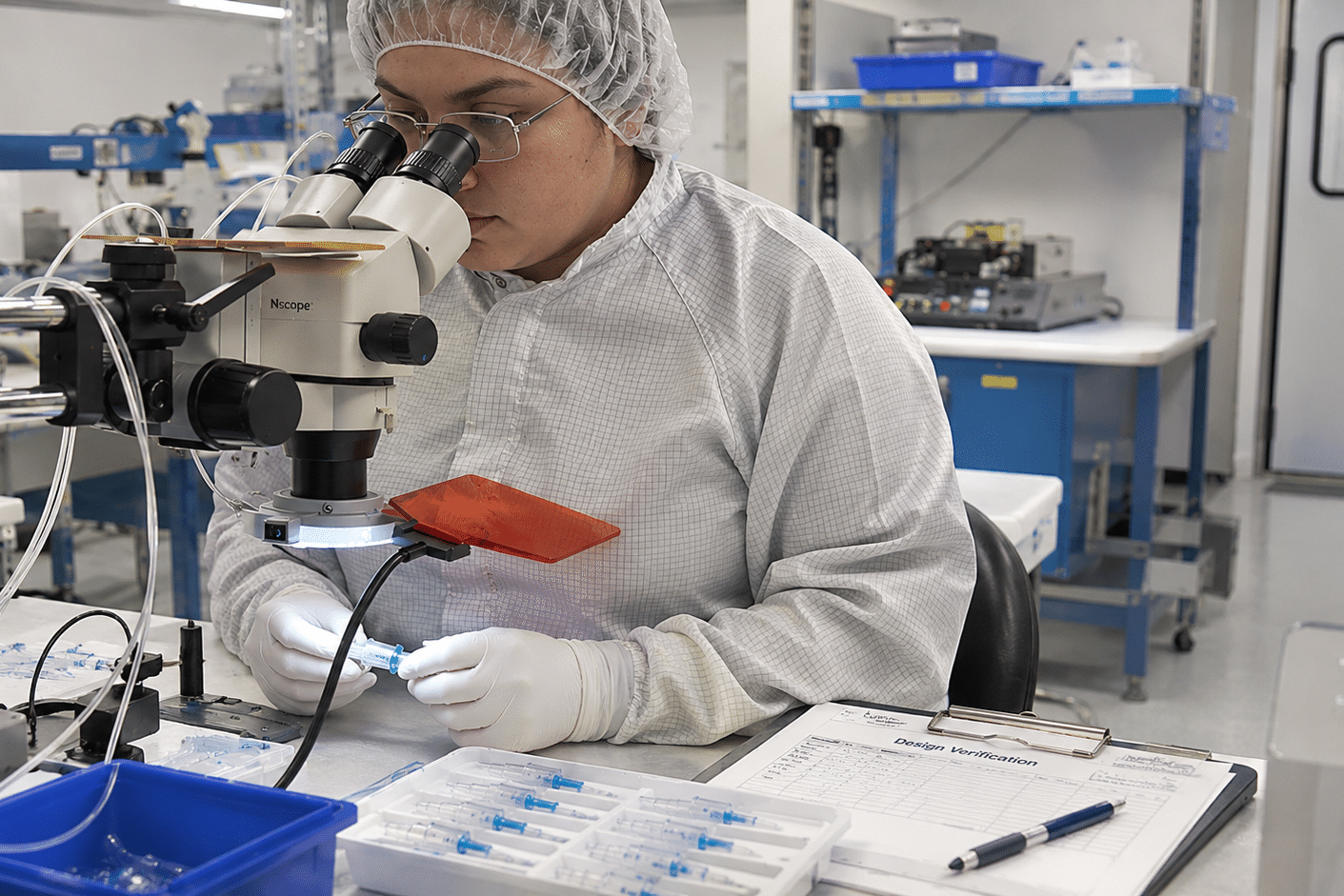
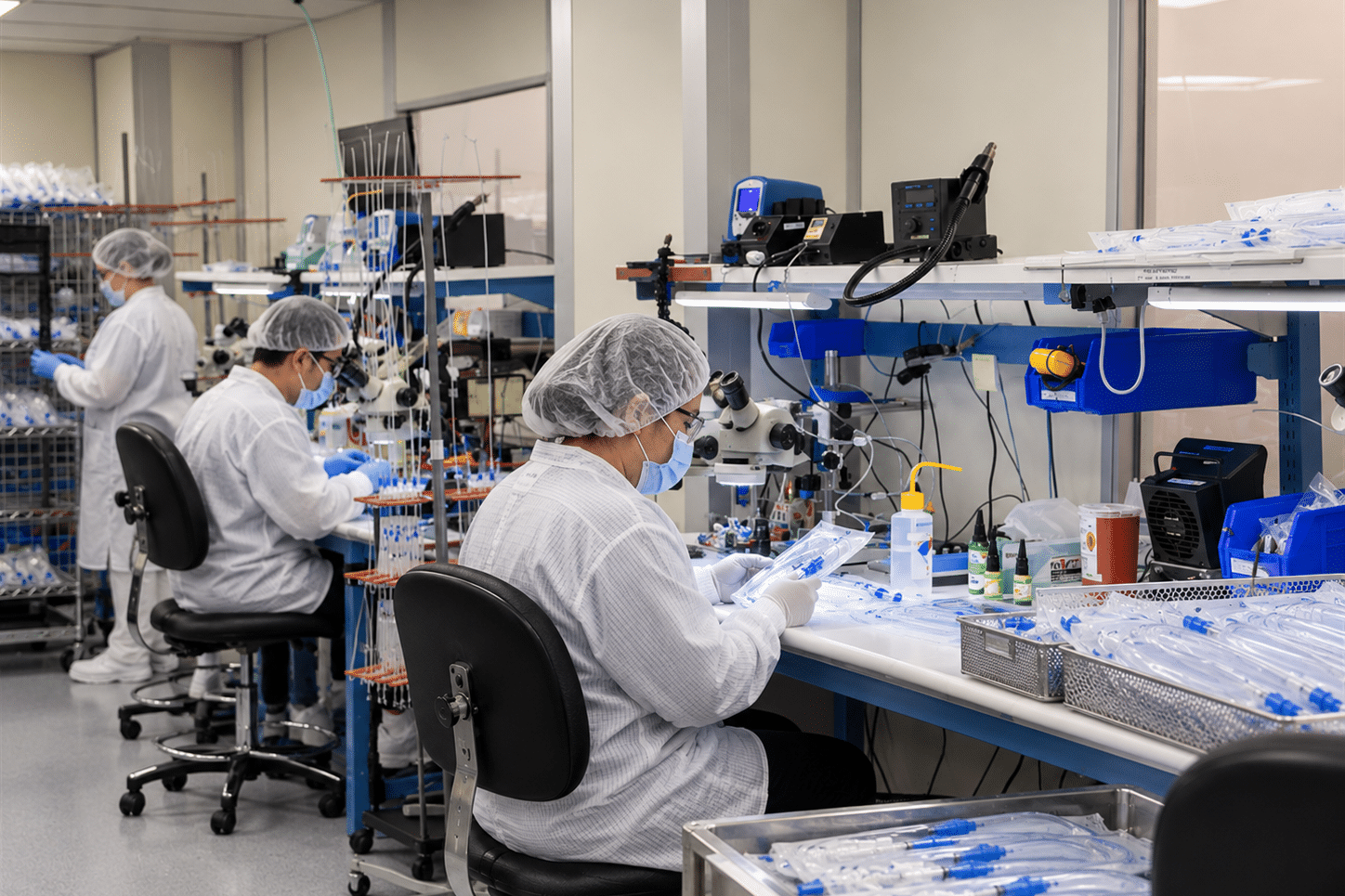
Addressing these gaps before formal production activities can reduce the likelihood of unexpected process changes, repeated qualification work, and manufacturing delays. At Pathway MedTech, we support design for manufacturability, design verification builds, process development, manufacturing documentation, and low-volume production. Our ISO 13485-certified quality management system and ISO Class 7 cleanroom manufacturing capabilities allow us to support controlled assembly and manufacturing activities as products progress from development toward commercialization.
How Pathway MedTech Supports Process Validation and Manufacturing Readiness
For medical device companies, determining whether a manufacturing process requires validation is often one part of a much larger production challenge. A company may also need to establish assembly equipment, develop manufacturing fixtures, qualify suppliers, document procedures, prepare design verification units, or transition from prototype suppliers into controlled manufacturing. These activities are closely connected, and decisions made during process development can influence product quality, validation requirements, manufacturing costs, and commercialization timelines.
At Pathway MedTech, we bring engineering, quality and regulatory support, and manufacturing capabilities together to help companies address these requirements within a coordinated program. We support development-stage manufacturing, design verification builds, pilot production, validation lots, cleanroom assembly, packaging, and early commercial manufacturing. Our team works with device companies to evaluate manufacturing processes, identify potential sources of variability, establish production documentation, and develop appropriate plans for process control and validation. By integrating these activities, we help manufacturers move beyond demonstrating that a product can be assembled successfully and toward establishing a repeatable manufacturing operation.
For programs requiring controlled-environment manufacturing, our ISO Class 7 cleanroom facilities support precision assembly, inspection, and related production activities. Our manufacturing model is particularly suited to companies that need flexibility during lower-volume production while establishing the processes and quality controls required for continued commercialization. Whether a company is preparing its first validation lot, transitioning from engineering prototypes, or addressing a process that is difficult to reproduce consistently, we can help evaluate the technical requirements and establish a practical path toward manufacturing readiness.
Frequently Asked Questions About Medical Device Process Validation
Does every medical device manufacturing process require validation?
No. Process validation is required when the resulting outputs cannot be adequately verified through subsequent monitoring or measurement. Some manufacturing operations can be controlled through appropriate inspection and testing, while others require validation because important characteristics cannot be fully evaluated after production. The determination should be based on the specific process, product requirements, and associated risks.
Is 100% inspection enough to avoid process validation?
Not necessarily. Inspecting every finished device may provide strong evidence for characteristics that can be reliably measured, but it does not establish characteristics that the inspection method cannot detect. For example, visually examining every adhesive joint may confirm alignment and appearance without demonstrating that each bond has achieved the required strength or cure.
Is IQ, OQ, and PQ mandatory for every manufacturing process?
IQ, OQ, and PQ provide a widely used framework for process qualification, but the appropriate validation approach depends on the manufacturing process and applicable requirements. The essential objective is to establish documented evidence that the process can consistently achieve its intended results using a justified validation strategy.
What changed under the FDA’s QMSR in 2026?
Effective February 2, 2026, the FDA revised 21 CFR Part 820 to incorporate ISO 13485:2016 by reference. Applicable process-validation requirements are now addressed through the incorporated standard, including Clause 7.5.6, rather than the former standalone requirements of 21 CFR 820.75. Manufacturers should evaluate their quality management systems against the current QMSR requirements.
Does a contract manufacturer handle process validation?
A contract manufacturer may perform or support manufacturing process development and validation activities within the agreed project scope. The responsibilities of the device company and manufacturing partner should be established through appropriate technical agreements, quality documentation, and project requirements. Outsourcing manufacturing does not automatically eliminate the device manufacturer’s applicable regulatory responsibilities.
Does a validated manufacturing process eliminate the need for inspection?
No. Process validation and routine inspection serve complementary purposes. Even after validation has been completed, manufacturers may need to monitor operating parameters, perform in-process inspections, evaluate finished products, and maintain production records to demonstrate that the process remains appropriately controlled.
Building Repeatability Into Medical Device Manufacturing
Medical device manufacturing requires more than producing an acceptable component or assembly once. It requires understanding how the product is manufactured, which characteristics can be verified, and where process controls must provide additional assurance. Final inspection remains an important part of manufacturing quality, but it cannot always establish what occurred within a bonding, joining, sealing, cleaning, or sterilization process. When important characteristics cannot be adequately verified after manufacturing, process validation provides a structured method for demonstrating that the operation can consistently achieve its intended results.
For companies transitioning from prototype development into design verification, clinical production, or commercial manufacturing, addressing process validation early can reduce uncertainty surrounding equipment requirements, manufacturing documentation, qualification activities, and production readiness. At Pathway MedTech, we help medical device companies navigate this transition by connecting engineering, controlled manufacturing, quality oversight, and validation planning within one manufacturing program. Our goal is to help establish manufacturing processes that support consistent product quality while providing the flexibility needed as programs advance toward commercialization.
References
- FDA: Quality Management System Regulation (QMSR)
https://www.fda.gov/medical-devices/postmarket-requirements-devices/quality-management-system-regulation-qmsr - eCFR: 21 CFR Part 820, Quality Management System Regulation
https://www.ecfr.gov/current/title-21/chapter-I/subchapter-H/part-820 - ISO 13485:2016, Medical Devices: Quality Management Systems
https://www.iso.org/standard/59752.html - ISO 11607-2:2019, Packaging for Terminally Sterilized Medical Devices, Part 2
https://www.iso.org/standard/70800.html - AAMI: Understanding QMSR and Part 820.10 Requirements
https://aami.org/news/qmsr-understanding-part-820-10-requirements-for-a-quality-management-system-and-the-applicable-regulatory-requirements/ - GHTF: Quality Management Systems, Process Validation Guidance, Edition 2
https://www.imdrf.org/sites/default/files/docs/ghtf/final/sg3/technical-docs/ghtf-sg3-n99-10-2004-qms-process-guidance-04010.pdf