The Hardest Part of Building a Medical Device Company
One of the biggest challenges for early-stage medical device startups is not the idea itself. Innovation in healthcare is accelerating, and new device concepts are constantly emerging from clinicians, engineers, and entrepreneurs working to improve patient outcomes.
The real challenge begins when that idea must be transformed into a manufacturable, regulatory-ready medical device. Moving from concept to commercialization requires far more than a strong idea or an impressive prototype. It requires a structured and disciplined development process that incorporates design controls, thorough documentation, product verification and testing, and careful consideration of manufacturability and regulatory requirements.
For many startups, the journey becomes significantly more complex once the device transitions from early concept development into formal design control and the structured development activities required for regulatory submission begin.
The Development Gap in the Medical Device Industry
Many design firms are capable of producing sophisticated prototypes or proof-of-concept models that demonstrate technical feasibility and help innovators secure early funding. However, creating a prototype is only the first step in bringing a medical device to market.
At the other end of the spectrum, large medical device contract manufacturers typically focus on high-volume production for mature products. Their operations are optimized for scale and efficiency once a device has already passed through development and regulatory milestones, and they often do not specialize in or have the flexibility to support the iterative work required during early-stage device development.
This creates a significant gap for early-stage medical device companies.
Startups frequently find themselves with a promising prototype but without the development infrastructure needed to transform that design into a product that can be verified, validated, manufactured at scale, and successfully submitted through the appropriate regulatory pathway.

Why Medical Device Development Is So Challenging
Medical device development is not simply about refining a prototype. It is a multidisciplinary process that requires engineering expertise, manufacturing planning, quality systems, and regulatory strategy working together from the beginning.
During this stage, innovators must move from early prototypes to design verification builds and pre-commercial manufacturing. Teams must ensure the device performs consistently, can be produced reliably at scale, and meets the strict regulatory and quality requirements that govern the medical device industry.
Every decision made during development can influence the long-term success of the product. Design tolerances, material selection, component sourcing, and manufacturing methods all impact product performance, cost structure, and regulatory approval. If these considerations are not addressed early in development, companies can face delays, redesigns, or additional regulatory hurdles later in the process.
For many early-stage startups, this phase requires capabilities that extend beyond internal engineering teams. Development often requires specialized manufacturing expertise, supply chain planning, and a clear understanding of regulatory pathways.
Development as a Core Pillar at Pathway MedTech
At Pathway MedTech, development is one of the core pillars of how we support medical device innovators.
We recognize that the transition from concept to commercialization is not a single step. It is a series of coordinated phases that require close alignment between product design, manufacturing processes, and regulatory strategy.
This is why Pathway MedTech operates as both a product development partner and a contract manufacturer. By combining these capabilities, we help innovators design devices that are not only functional but also manufacturable, scalable, and aligned with regulatory expectations.
Our team works alongside startups and internal development teams to complement their capabilities. Many early-stage companies have strong ideas and talented engineers but may not yet have access to specialized manufacturing infrastructure or regulatory development expertise. Pathway MedTech helps fill that gap by providing the technical and operational support needed during the most critical stages of development.

Supporting the New Product Introduction Process
Our primary focus is supporting new product introduction (NPI) and helping innovators navigate the complex transition from early concept to commercialization.
During the medical device development process, Pathway MedTech supports clients across several key areas:
Product Design and Engineering
Development begins with translating an initial concept into a well-defined product design. This includes refining device architecture, selecting materials, optimizing performance, and ensuring that the design meets both clinical and engineering requirements.
Design for Manufacturability (DFM)
Design for manufacturability ensures that devices can be produced consistently, efficiently, and at scale. Addressing manufacturability early in development helps prevent costly redesigns and manufacturing challenges later in the commercialization process.
Supply Chain Development
Reliable supply chains are essential for medical device manufacturing. Development teams must identify qualified suppliers, source appropriate materials, and ensure component availability that supports both early builds and future production.
Design Verification Builds
Verification builds are a critical step in demonstrating that the device performs as intended. These builds help validate design decisions, confirm device functionality, and generate the data needed for regulatory submissions.
Regulatory Pathway Planning
Medical device development must align with regulatory requirements from the beginning. Understanding the appropriate regulatory pathway and planning for design documentation, testing, and quality compliance is essential for successful market approval.
Process Development and Validation
As devices move closer to commercialization, manufacturing processes must be defined, tested, and validated. This ensures that devices can be produced consistently while meeting quality and regulatory standards.
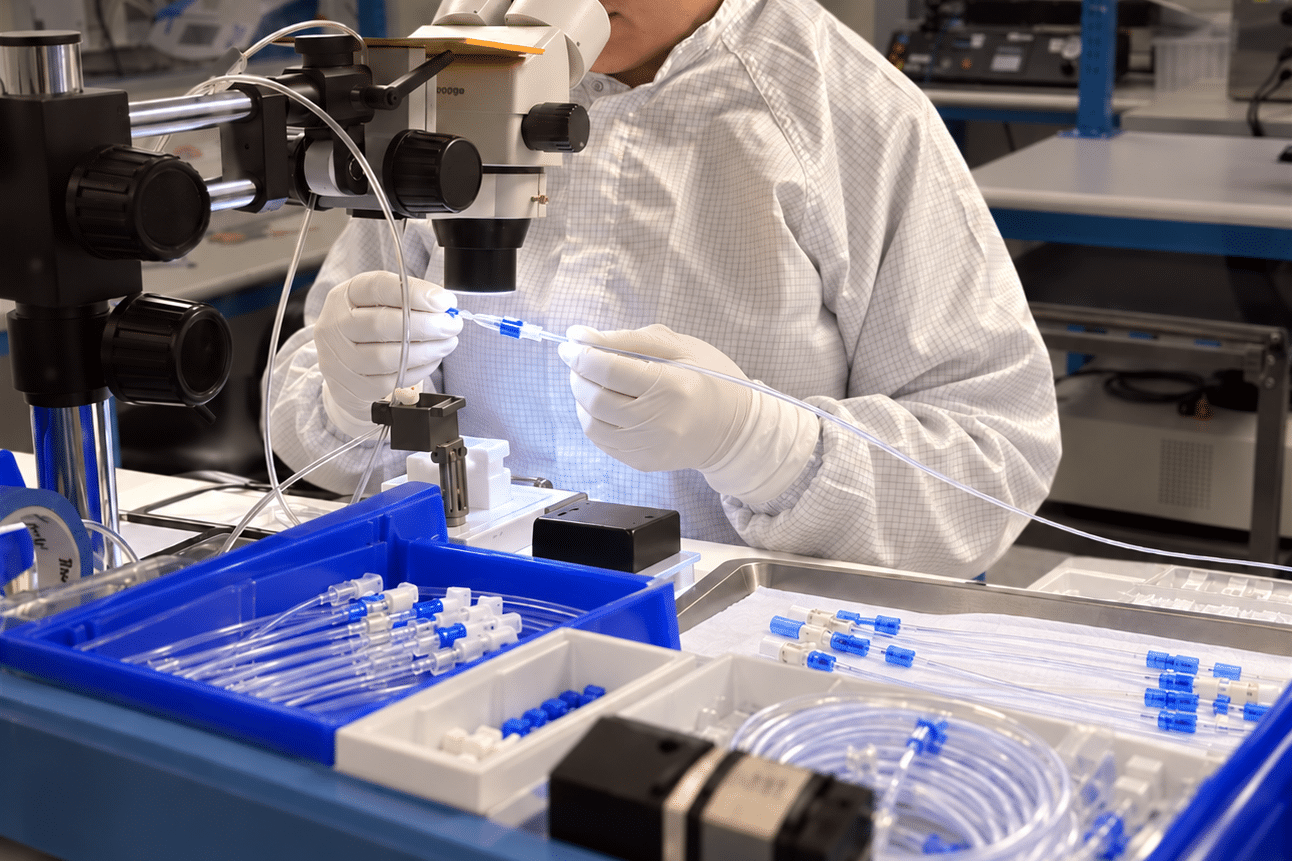
Cleanroom Manufacturing and Assembly
For many medical devices, controlled manufacturing environments are essential. Cleanroom manufacturing capabilities support the production of devices that require strict contamination control and quality assurance.
Early-Stage Commercialization
Development does not end when a device is functional. Early commercialization requires coordinated planning for production readiness, supply chain scalability, and quality management systems that support ongoing manufacturing.
Pathway MedTech supports each of these stages to help innovators move confidently through development and toward commercialization.
Building Devices That Are Ready for the Real World
Medical devices must meet some of the highest standards of safety, reliability, and regulatory compliance in any industry. Development is the phase where these requirements are built into the product.
Design decisions must account for sterilization methods, material and packaging compatibility, long-term reliability, manufacturability, and supply chain stability. At the same time, teams must generate the documentation and verification data required for regulatory submission.

Development Is Where Innovation Becomes Reality
For early-stage medical device innovators, the development phase is where ideas are transformed into real products that can impact patient care. Having the right development partner can make a significant difference in navigating the challenges of engineering, regulatory compliance, and manufacturing readiness.
At Pathway MedTech, we do more than help design medical devices. We work alongside innovators to bring ideas to life and guide them through the complex journey from concept to commercialization. Development is where innovation becomes reality, and it is a responsibility we take seriously.