Bridging the Gap Between Concept and Commercialization
Bringing a medical device from concept to commercialization requires more than strong engineering. It requires the ability to translate design into scalable and compliant manufacturing. Many programs encounter challenges not in early innovation, but in the transition from development into production, where design intent, regulatory requirements, and manufacturing realities must align.
Pathway Medtech has developed and manufactured a wide range of medical devices across multiple clinical areas, supporting programs from early design and development through clinical builds and commercial manufacturing. By working across the full product lifecycle, we help bridge the gap between concept and commercialization while ensuring that devices are not only functional, but also manufacturable, scalable, and regulatory-ready.

Experience Across Diverse Medical Device Technologies
Our experience spans diverse technologies, therapeutic areas, and regulatory pathways. This breadth allows us to apply cross-functional knowledge to solve complex engineering and manufacturing challenges. We draw from lessons learned across prior programs to anticipate risks and improve outcomes.
Examples of devices and programs we have supported include:
- Catheter and vascular access systems (interventional cardiology / vascular)
- Urological catheter systems and coating technologies (urology)
- Surgical needles and access and delivery devices (vascular access / blood collection)
- Drug delivery systems (implantable, ingestible, and injectable platforms)
- Orthopedic implants and surgical fixation (orthopedics)
- Laparoscopic surgical instruments (minimally invasive surgical devices)
- Guidewires and advanced navigation systems (interventional cardiology / vascular)
- Diagnostic and monitoring systems (biosensors, optical, and wearable devices)
- Biochemical and glucose diagnostic testing systems (diabetes / in-vitro diagnostics)
- Imaging and targeting systems (radiology / image-guided procedures)
- Ophthalmic devices and eye care systems (ophthalmology)
- Wound care and topical therapeutic systems (wound care / dermatology)
- Infection prevention and sterilization technologies (infection control)
- Respiratory therapy systems (e.g., CPAP) (respiratory care)
- Thermal therapy and pain management devices (pain management)
- Medical device and pharmaceutical packaging systems (medical device / pharma)
- Perfusion and physiological monitoring systems (cardiovascular)
- Bioanalytical and assay instrumentation (laboratory diagnostics / life sciences)
- Automation and manufacturing support systems (medtech manufacturing)
This breadth of experience is not just a reflection of the technologies we have worked on. It is a foundation for how we approach new programs. Each project brings unique technical and regulatory challenges, but many of the underlying risks are consistent. By leveraging insights across engineering, quality systems, and manufacturing, we help identify potential issues earlier in the development process. This reduces rework and supports more efficient program progression.
An Integrated Approach to Development, Quality, and Manufacturing
Pathway supports companies across the full product lifecycle, including design and development, quality and regulatory, manufacturing, packaging, and sterilization. What differentiates our approach is not just the breadth of these capabilities, but how they are integrated. This ensures that engineering, quality, and manufacturing considerations are aligned from the earliest stages of development.
This integrated approach is especially important in medtech, where decisions made during design can significantly impact manufacturability, cost, regulatory strategy, and long-term scalability. By maintaining alignment across disciplines, we help ensure smoother transitions between phases and reduce the friction that often occurs when programs move between separate teams or organizations.

Manufacturing Infrastructure Built for Scale and Compliance
A core strength of Pathway is our manufacturing infrastructure, built specifically to support the critical transition from prototype to scalable production. Many companies reach a point where initial designs have been proven, but the path to reliable and repeatable manufacturing is unclear. This phase often involves design verification, process development, and clinical manufacturing, and it can introduce significant risk if not properly managed.
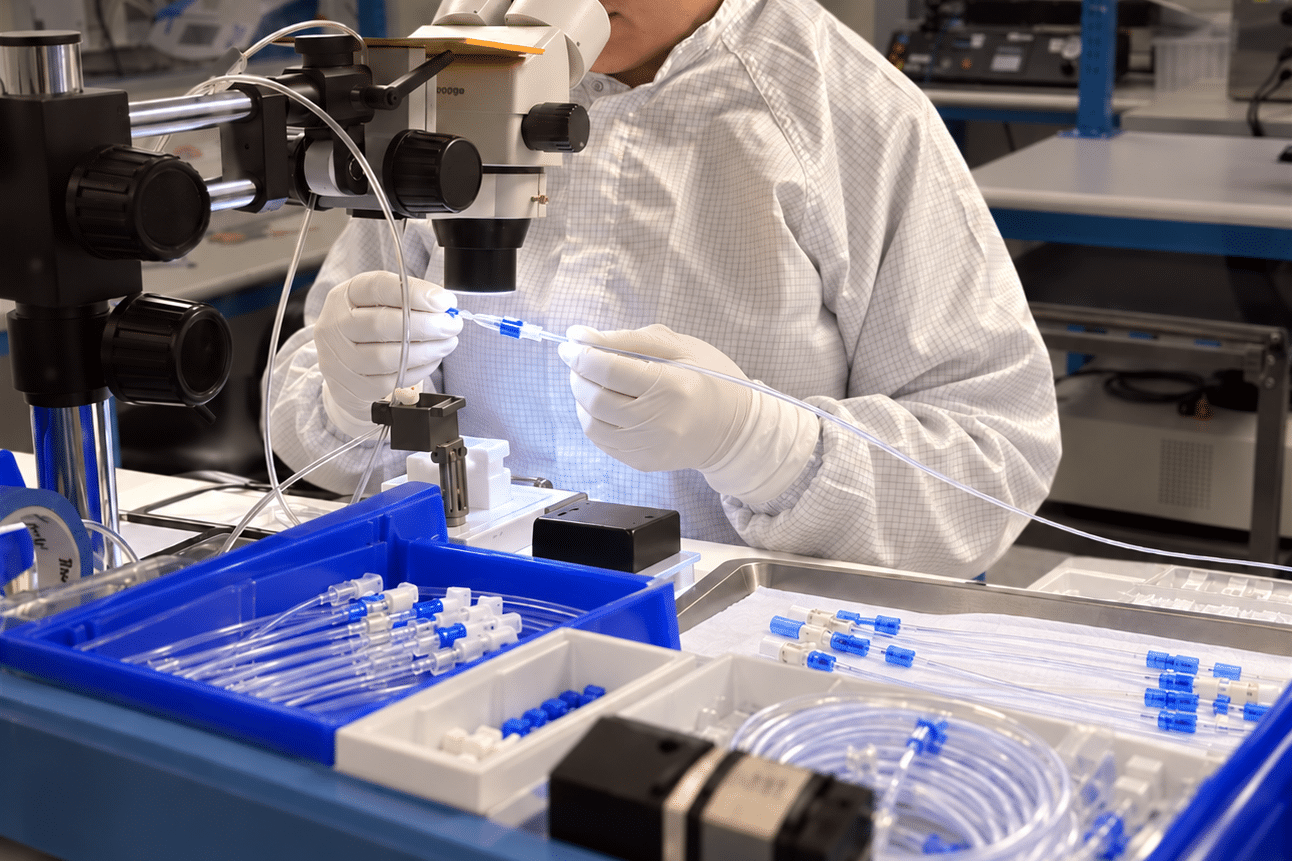
We have developed our capabilities to support this transition, including development builds, design verification, clinical manufacturing, and commercial manufacturing within controlled and compliant environments. Our facilities and processes are designed to maintain continuity, traceability, and alignment with quality systems as programs evolve. This helps preserve design intent while meeting regulatory expectations.
In addition to technical execution, our team brings practical experience navigating the challenges that arise during scale-up. This includes refining processes for repeatability, addressing variability, supporting validation activities, and ensuring that documentation and controls are in place to support both regulatory submissions and ongoing production.

Supporting the Development of Scalable, Regulatory-Ready Devices
By combining deep technical experience with in-house manufacturing capabilities, Pathway is able to work alongside companies as a true partner. Rather than handing off programs between development and manufacturing, we maintain continuity throughout the process. This helps teams move forward with greater confidence and fewer disruptions.
Ultimately, our goal is to help bridge the gap between concept and commercialization. We support the development of medical devices that are not only innovative, but also manufacturable, scalable, and ready for real-world use.